





Give every provider the same requirements
Start by describing the website’s main purpose: explaining services, collecting enquiries, presenting products or selling online. Separate the page list from the feature list. “Corporate website” alone does not establish whether product search or multilingual content management is included.
If you already have a site, share its address and identify pages worth keeping. State which texts, images and brand assets are ready. A shared brief reduces comparisons between proposals based on different assumptions.
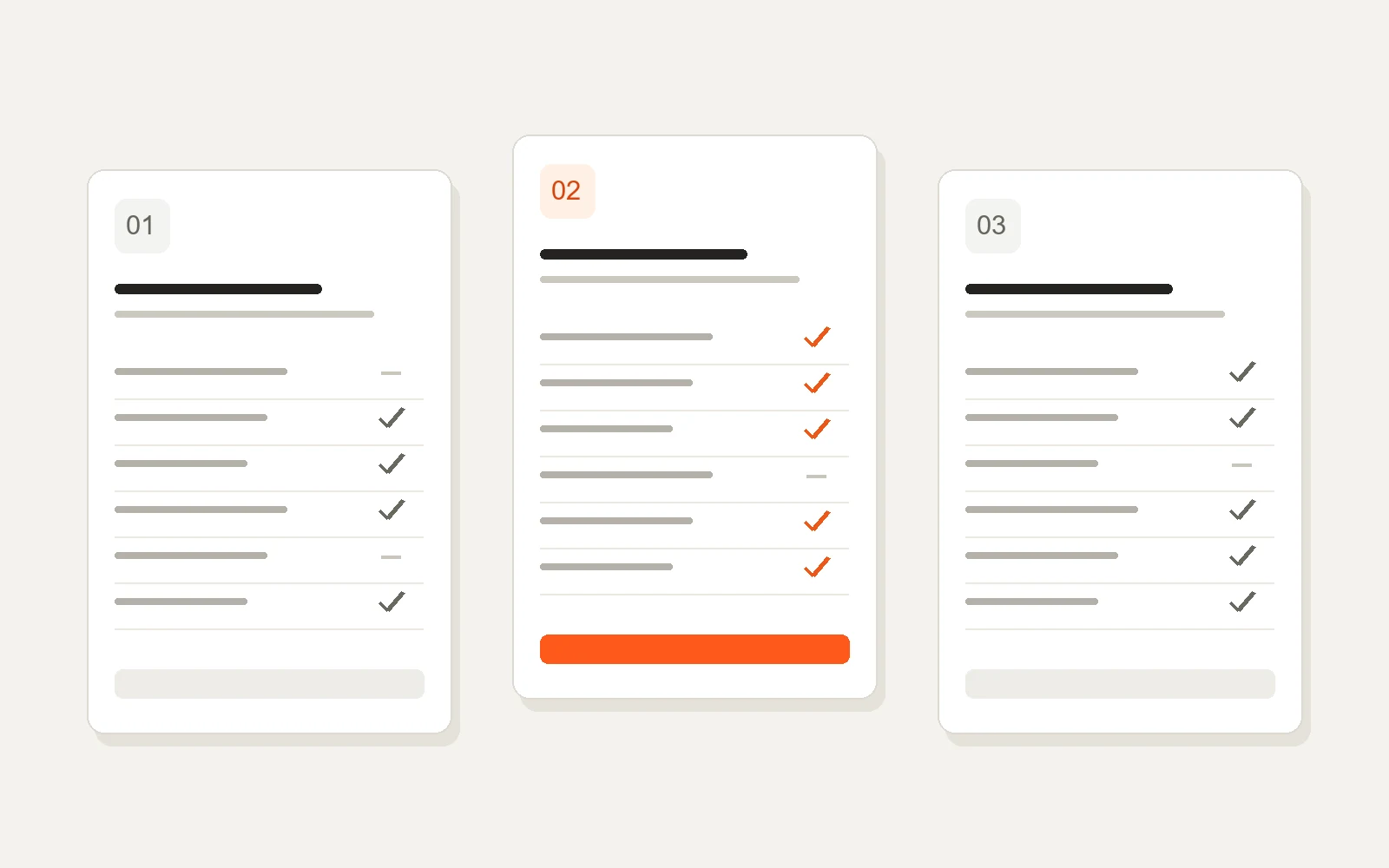
An eight-part proposal comparison table
Use the table as meeting notes. For each proposal, ask whether an item is included, costs extra or is outside scope. An omitted item is not automatically a problem; the question is whether the proposal meets your requirements.
| Area | Question | Evidence to request |
|---|---|---|
| Pages | Which page types and content are included? | Page and template list |
| Content | Who prepares and enters copy, images and translations? | Content responsibility list |
| CMS | Which fields can our team edit? | Demo using realistic content |
| Mobile use | How will menus, headings, tables and forms be checked? | Example tasks on a phone |
| Forms | Where are enquiries saved and who receives notifications? | Submission and notification test |
| SEO and migration | What happens to existing URLs, titles and redirects? | URL mapping and launch checklist |
| Accounts | Who controls domain, hosting and measurement access? | Account and permission handover list |
| Maintenance | How are faults, updates and new requests handled? | Support scope and contact process |
Evaluate the CMS through actual tasks
Ask for a short demonstration of editing a headline, uploading an image and saving a draft article. Check language fields and page visibility if you need them. Having a CMS does not necessarily mean that every part of the site can be edited.
Choose three tasks your team will perform often, such as changing service copy, updating contact details and publishing an article. Complete those tasks during the demonstration instead of judging the panel by a screenshot or the number of modules.
Test mobile tasks as well as appearance
Go beyond the homepage on a phone. Open the menu, reach a service, use a telephone link and check how a form handles missing or invalid information. Readability of long headings, touch targets and tables that remain within the page also belong in the acceptance discussion.
A single performance score should not be the only criterion. Content, images and third-party tools influence results. Agree on the pages, test conditions and scope of corrective work. Our guide to the essentials of a good website covers other preparation checks.
Discuss migration when replacing an existing site
List the current site’s useful URLs, articles and images. Map changed URLs to relevant new pages. Clarify that domain registration, hosting and email are separate services, and ask whether the website launch affects business email.
Identify which backup, redirect, form, sitemap and measurement tasks are included. Implementing SEO basics is different from promising a particular ranking by a fixed date. Google’s SEO Starter Guide explains foundational practices that help search engines understand content.
Understand why similar proposals differ
In a hypothetical comparison, two providers might both offer a “corporate website”. One scope might cover building pages from supplied copy, while another includes editing content, migrating data, custom CMS fields and post-launch support. A longer scope is not automatically preferable if those additional tasks are unnecessary.
Ask what changes if you add an omitted item. Clarify payment stages, approvals, revision scope and account handover in writing. Compare the scope needed for your project, rather than the total price alone.
A reusable brief for your first meeting
- Your business, audience and the website’s main purpose.
- Required pages, services and any product or category structure.
- Available copy, images, branding and translations; material still needed.
- Editable fields and user permissions required in the CMS.
- Forms, notification recipients and enquiry storage.
- Languages and the person responsible for each language’s content.
- Current domain, hosting, email and URLs to retain.
- Any payment, stock, CRM or other system integrations.
- Target launch period and approvals your team must provide.
- Post-launch support and maintenance needs.
The initial brief does not need sensitive account passwords. Naming the services and the people responsible for access is enough to discuss scope.
From an İzmit meeting to a written scope
When working with a local team, also consider the meeting format, project contact and how decisions are recorded. Callforsoft holds project meetings by appointment at its İzmit office. The homepage introduces our web design approach for Kocaeli and İzmit, while the service page explains corporate website and e-commerce scope.
After preparing your requirements, you can request a proposal for your project. If you need an integration or a custom workflow, identify it separately from visual design tasks so proposals remain comparable.